Maj. James Capers Jr. Wikipedia, Biography, Age, Son, Wife, Medal, Military Career, Net Worth, Family

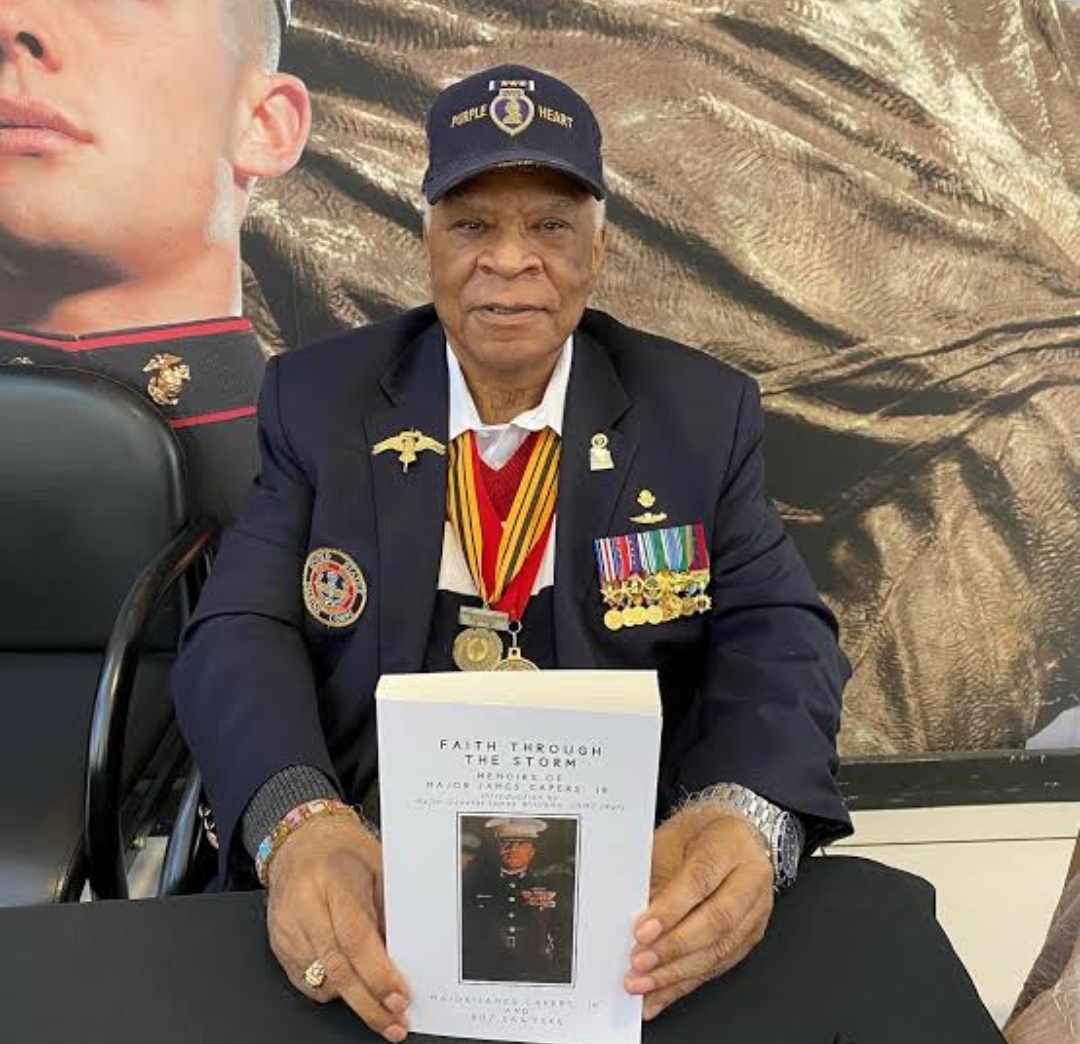
Major James Capers Jr. is a highly decorated veteran of the United States Marine Corps who served with distinction as a member of Force Reconnaissance during the Vietnam War. Born on August 25, 1937, in South Carolina into a family of sharecroppers, he experienced the hardships of segregation in the Jim Crow South before relocating to Baltimore with his family.
In 1956 Capers enlisted in the Marine Corps. Early in his career he excelled in marksmanship at boot camp and soon transferred into elite units, becoming the first African-American Marine to serve in the Marine Corps’ Reconnaissance community and the first African-American to command a Marine Reconnaissance company.
During his Vietnam service, Capers led his team through some of the most hazardous missions of the war, including long-range patrols and ambush engagements. In one noted incident in April 1967, despite being wounded multiple times by shrapnel and a broken leg, he continued to direct his men, order mortar fire, and ensure evacuation of his team — actions for which his Silver Star citation praises “bold leadership, undaunted courage, and complete dedication to duty.”
Beyond his battlefield valor, Capers also broke barriers at home. In the late 1960s and early 1970s he became the face of the Marine Corps “Ask a Marine” recruiting campaign — the first U.S. Marine Corps recruiting poster to feature a Black Marine — thereby contributing to a changing image of the Corps during integration.
Early Life and Background
Age, Hometown and Ethnicity
James Capers Jr. was born on August 25, 1937, in South Carolina, though the exact town is uncertain, as historical records for African Americans in that era were often incomplete. He is African-American, born into the deeply segregated society of the Jim Crow South.
Family and Upbringing
Capers was raised in a family of sharecroppers. He was the youngest of four children who survived into adulthood (he had siblings who died in childhood). At an early age, his family relocated from rural South Carolina to Baltimore, Maryland, after his father fled due to a warrant for his arrest during the highly discriminatory legal climate of the time. Growing up, he helped with tasks such as picking cotton, croppers’ work, milking cows and caring for animals, in an environment marked both by hard labour and the challenge of institutional racism.
Education and Early Influences
There is limited publicly available information about Capers’ formal schooling, largely because of the era and circumstances of his upbringing. What emerges, however, is that he learned early on about perseverance, discipline and self-reliance: his childhood horse-riding mishaps (he rode a horse named “Big Red” and was repeatedly thrown off) became metaphors for “if you get knocked down you must get back up”. This ethos carried into his decision to enlist in the Marines at age 18.
Military Career and Qualifications
Enlistment and Early Service
Capers enlisted in the United States Marine Corps in 1956 at age 18. He attended boot camp at Parris Island, South Carolina, where he excelled in marksmanship and earned the Outstanding Rifle Marksmanship distinction. Early in his career he was exposed to the Marine Corps’ evolving integration of African-American Marines, and he entered the Reconnaissance community, which was then highly selective and demanding.
Force Reconnaissance and “Team Broadminded”
Capers became part of the elite 3rd Force Reconnaissance Company (and earlier the 1st Force Recon Company), which conducted long-range reconnaissance and clandestine missions behind enemy lines during the Vietnam War. He earned the nickname and led a team that dubbed themselves “Team Broadminded.” Over the course of his service he took part in 64 long-range reconnaissance patrols and five major campaigns in Vietnam.
Battlefield Commission and Command Firsts
In 1966 while in Vietnam, as a non-commissioned officer, Capers received a battlefield commission to second lieutenant—the first enlisted African-American Marine to receive such commission in the Marine Corps Recon community. He went on to become the first African-American to command a Marine Recon company.
Key Missions and Combat Experience
Among his many dangerous operations, one of the most celebrated took place in April 1967 at Phu Loc, South Vietnam, where his 3rd Force Recon team was ambushed. Despite suffering heavy wounds including multiple shrapnel and bullet wounds and a broken leg, Capers directed his men, ordered mortar fire, refused to abandon the mission, and ensured evacuation of his team. He also participated in recovery of a downed B-57 bomber believed to carry a nuclear bomb, amphibious assaults near the DMZ, POW rescue operations and other highly classified missions.
Read Also: Nolan Williams Wikipedia, Biography, Age, Wife, Children, Education, Net Worth, Family
Cold War and Post-Vietnam Service
After his Vietnam deployment, Capers continued service in covert special-operations roles during the Cold War, operating in Africa and Eastern Europe. Details remain classified but his work extended beyond combat to intelligence and special operations tactics. He retired from the Marine Corps in 1978 with the rank of Major.
Medals, Awards and Recognitions
Capers’ decorations reflect his valor, leadership and barrier-breaking service:
- Silver Star for heroism in Vietnam (award upgraded after nomination for Medal of Honor)
- Two Bronze Stars with “V” device (for valor)
- Three Purple Hearts (for wounds received in action)
- Combat Action Ribbon, Navy Commendation Medal, Navy Achievement Medal, Joint Service Commendation Medal, Vietnam Cross of Gallantry, Battle Stars, and numerous Letters of Merit and Appreciation.
- Inducted into the inaugural class of the U.S. Special Operations Command’s “Commando Hall of Honor” in 2010.
His service and heroism are currently under renewed review for awarding the Congressional Medal of Honor, with legislation introduced in 2025 to waive the time-limit requirement for his Vietnam-era actions.
Career Beyond the Military
After retiring from active Marine service, Capers ventured into civilian and philanthropic work. He worked in the telecommunications industry and helped establish and run the nonprofit “Gary Capers Foundation,” named after his son, aimed at helping disabled youth. He has also been a mentor to younger Marines and special operations aspirants, sharing lessons from his experience and pioneering leadership.
Personal Life
Wife and Children
Capers was married to Dorothy L. “Dottie” Capers (née … born June 13, 1938) on June 20, 1959. The couple had one son, Gary Wayne Capers, who was born blind and died of an undiagnosed appendicitis in 2003. Dottie Capers passed away June 28, 2009, at Onslow Memorial Hospital in Jacksonville, North Carolina.
Residence and Later Years
Major Capers resides in North Carolina and continues to be involved with the Marine special operations community and public appearances.
Net Worth
There is no verified public record of a precise net worth for Major Capers. Some unreliable sources list large figures (such as $6.6 billion) but those are clearly erroneous and stem from mistaken aggregation. No reputable source substantiates his net worth.
Conclusion
The life of Major James Capers Jr. is a compelling story of courage, transformation and barrier-breaking achievement. From a sharecropper’s son in South Carolina to a decorated Marine leader conducting clandestine missions in Vietnam, he embodied the values of honour, commitment and excellence. Though his journey was marked by hardship, injury and systemic discrimination, his legacy transcends adversity—it inspires generations of Marines and Americans alike. As efforts continue to recognise his heroism with the nation’s highest honours, his contribution to military history and civil-rights progress remains profound.
FAQs
What is the full name of Maj. Capers?
His full name is James Capers Jr.
When and where was he born?
He was born on August 25, 1937, in South Carolina (specific town not definitively recorded).
What branch of the military did he serve in and for how long?
He served in the United States Marine Corps for approximately 22 years, retiring in 1978 as a Major.
What significant “firsts” did he achieve?
He was the first African-American Marine to receive a battlefield commission and the first African-American to command a Marine Recon company.
What are some of his notable military awards?
Among his awards: Silver Star, two Bronze Stars with valor, three Purple Hearts, Combat Action Ribbon, Vietnam Cross of Gallantry, and induction into the Socom Commando Hall of Honor.
What heroic action occurred in April 1967 involving him?
During a mission at Phu Loc, Vietnam, his team was ambushed; despite multiple severe wounds (including a broken leg), Capers directed his men’s evacuation, ordered mortar fire and remained behind until all were extracted.
Who was his wife and did he have children?
His wife was Dorothy “Dottie” Capers; they had one son, Gary Wayne Capers. Gary died in 2003 and Dottie died in 2009..